


Why Is the Minimum Order Quantity for Pre-cut Film 50,000? Cost and Selection Guidelines for Small-Batch Custom Orders
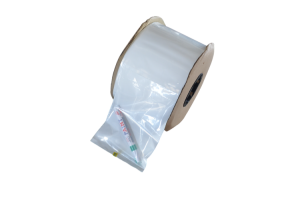
The minimum order quantity for pre-cut film typically starts at 50,000 units; below this quantity, the unit cost of the bag-making process increases significantly. This article addresses three practical questions—“Why is the minimum order quantity for pre-cut film 50,000 units?,” “Can small batches be produced?,” and “How can customization costs be reduced?”—to explain the cost logic behind minimum order quantities, criteria for determining quotes, and feasible procurement solutions, thereby helping packaging procurement professionals make informed decisions between prototyping, test marketing, and full-scale production.
I. Why Is the Minimum Order Quantity for Pre-printed Film Generally Set at 50,000 Units?
Pre-cut film is a type of custom packaging material; for roll film or pouches, it is necessary to first create printing plates, adjust the machinery, and conduct test runs before moving into stable production. The purpose of a minimum order quantity is to spread these fixed costs across a sufficiently large number of finished products.
1. Fixed costs for plate making and die cutting: Plate and die cutting fees are not based on quantity; the cost is the same whether you produce 10,000 or 50,000 units. The smaller the order, the higher the cost per unit.
2. Fixed setup waste for printing presses: Every time the press is started up, color matching and registration adjustments result in waste film. This waste is calculated based on the number of press startups and is not discounted based on order size.
3. Slitting and rewinding efficiency: Frequent order changes for small batches tie up machine time, so factories typically screen orders based on minimum order quantity thresholds.
4. Minimum Order Quantity Restrictions for Materials: Raw materials such as film and adhesive have minimum order quantities; orders below these quantities will incur additional procurement costs.
Therefore, the minimum order quantity of 50,000 represents a balance between cost and efficiency, rather than an arbitrary threshold. The closer the quantity is to the minimum order quantity, the more significant the per-unit price reduction; once the minimum order quantity is exceeded, the rate of price reduction gradually decreases.
II. What Are the High Costs Associated with Small-Batch Custom Orders That Require Pre-Mold Opening?
Many buyers ask: What exactly makes small-batch customization with pre-made film so expensive? If you break down the quote, the answer becomes clear.
Cost Item Large Quantities (≥50,000) Small Quantities (e.g., 10,000)
Plate-making/Die-cutting Costs: When spread across a large number of finished products, the cost per unit is extremely low; when the cost base is small, the cost per unit increases significantly.
Start-up and commissioning losses are negligible when amortized, but their proportion has increased significantly.
Job-change downtime; high output per unit of time; frequent job changes reduce efficiency
Material Procurement: Purchases are made by the roll or lot; a surcharge may apply for partial purchases.
Small-batch production is not impossible; however, it requires accepting a higher unit price or reducing fixed costs by streamlining the production process (such as reducing the number of colors or switching to a standard bag style).
III. How to Negotiate Minimum Order Quantities for Pre-cut Films: 4 Ways to Reduce Customization Costs
If your actual usage does not yet reach 50,000 units, you can discuss the following options with your supplier:
1. Consolidate specifications: Combine multiple SKUs into rolls of the same width or bags of the same style; after consolidation, the total quantity will more easily meet the minimum order quantity.
2. Simplify the process: Reduce the number of printing colors and eliminate spot special effects, thereby lowering plate-making and press setup costs.
3. Ship in batches, produce in a single run: Produce 50,000 units in a single run and pick up orders in batches as needed—this allows you to take advantage of volume pricing while reducing inventory pressure.
4. Produce a prototype before placing a production order: Use the prototype to verify the film material, opening locations, and seal strength, thereby avoiding additional costs resulting from rework on the production run.
Please note that pre-cut film requires consideration of the opening direction, seal width, roll diameter, and tension matching. These parameters must be consistent with the specific model of the automatic packaging machine; it is only meaningful to discuss pricing after these parameters have been confirmed.
IV. What is the difference between pre-cut film, standard roll film, and pre-made bags?
When making purchasing decisions, people often compare pre-cut film with standard roll film and pre-made bags; however, these three products are suited for different applications:
1. Pre-cut film: A tear-off notch or specific opening is pre-cut into the film for use with automatic packaging machines, balancing efficiency with ease of opening. This is suitable for products that require a specific opening direction.
2. Standard roll film: No pre-cut openings; relatively low cost, but the end-user opening experience depends on subsequent processing.
3. Preformed bags: Directly molded without the need for bag-making or machine setup; flexible for small batches, but the unit cost is typically higher than that of high-volume production using roll film.
If the product has specific requirements for how it is opened, pre-cut film is the better choice; if the volume is very small during the trial sales phase, you can start with pre-made bags as a temporary solution and switch to pre-cut film once production volumes increase.
V. Is training required for pre-cut film customization, and how many people are needed to operate the system?
Pre-cut film is a consumable item; the key to the process lies in the packaging machine. Generally, the procedure is as follows:
1. Changing rolls: This can be done by one person; pay attention to the roll orientation and tension settings.
2. Parameter Adjustment: For the first time the machine is put into operation, it is recommended that the supplier provide a film parameter sheet, and that the temperature, speed, and sealing pressure be set according to the machine model.
3. Training: Most suppliers offer hands-on guidance or parameter instructions. While routine roll changes do not require specialized training, it is recommended to schedule an on-site or remote verification session when using a new machine model for the first time.
Informing the supplier of the machine model, film width, roll diameter, and slitting position before purchasing can reduce the need for repeated adjustments during the trial run phase.
VI. Conclusion
The minimum order quantity for pre-cut film is set at 50,000 units. The primary reason is that the fixed costs associated with plate making, machine setup, and material procurement require a sufficient quantity to be spread out; the smaller the order, the higher the cost per unit. For small-batch orders, customization costs can be reduced by combining specifications, simplifying the production process, and arranging for batch-by-batch pickup from a single production run. When selecting a product, first confirm the machine specifications and opening structure, then compare the total costs of pre-cut film, standard roll film, and pre-made bags. Once your usage stabilizes, switching to a batch size of 50,000 units or more will yield more significant price advantages.
VII. Frequently Asked Questions
7.1 Is it possible to order fewer than 50,000 units for the initial film production run?
This is negotiable, but if the order quantity falls below the minimum order quantity, the base for sharing plate-making and machine setup costs will decrease, resulting in a higher unit price. We recommend specifying your actual quantity and specifications first so the supplier can provide a quote for small batches, which you can then compare.
7.2 How much does a small-batch custom order with pre-made film cost?
Pricing depends on the material, structure, size, number of print colors, and quantity; there is no standard unit price. Generally, the closer the order quantity is to 50,000 units, the lower the cost per unit. You may request that the supplier provide separate quotes for plate-making fees and processing fees.