


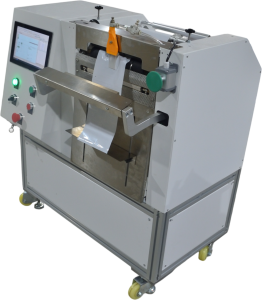
Autobag Bagging Machine Alternative: Desktop Automatic Bagging Machine Compatible with Pre-Cut Film Rolls
When looking for alternatives to Autobag bagging machines, most factories are concerned about three things: whether they can continue to use pre-gusseted film rolls, whether desktop automatic bagging machines take up too much space, and whether the operating and maintenance costs will remain manageable after the switch. This article explains how desktop automatic bagging machines can serve as a viable alternative to Autobag equipment by examining four key aspects—film compatibility, structural differences, selection criteria, and staff training—and provides actionable evaluation criteria.
I. Why Compatibility with Pre-Cut Film Rolls Is the First Consideration When Evaluating Alternatives to Autobag Bagging Machines
The core consumable in the Autobag system is pre-opened film rolls, in which the bag openings are already cut during production; the bagging machine uses air or mechanical force to open the bag openings to complete the filling process. If alternative equipment cannot reliably use this type of film roll, consumable costs and changeover times will increase significantly.
To determine compatibility, consider the following three points:
1. Bag opening types: Pre-cut bags, continuous bags, and bags with hanging holes require different bag-opening mechanisms; actual measurements of film roll samples should be provided before purchasing.
2. Inner diameter and maximum outer diameter of the film roll: The unwinding shaft on desktop models typically has a size limit; if the film roll is too large, an external unwinding stand is required.
3. Film Thickness and Material: PE, composite films, and biodegradable films differ significantly in terms of tension control; the film is prone to misalignment, and thicker films require greater traction.
It should be noted that different brands of equipment use different bag-opening methods (air-blow, vacuum suction cup, and mechanical expansion), each of which has varying compatibility with film rolls. The performance of the same roll of film may differ between two machines, so actual bag-opening tests on the machine are more reliable than the specifications in the parameter table.
II. What are the structural differences between desktop automatic bagging machines and Autobag bagging machines?
Both machines share the same objective—automatically filling bulk materials into laminated bags and sealing them—but their final configurations differ.
Comparison Criteria: Autobag Vertical Bagging System vs. Desktop Automatic Bagging Machine
Footprint and Installation: Most models are floor-standing racks that require space for operation and material storage. Tabletop models are suitable for end-of-line applications or small workshops.
Production Capacity Range: Medium-to-high capacity, suitable for continuous, high-volume production; low-to-medium capacity, suitable for small-batch production of multiple product varieties
Changeover Procedure: Replace the film roll and the bag-forming die. The film roll is the primary component to be replaced; on some models, the bag-opening assembly must also be replaced.
Expandability: Can be connected to counting, weighing, and printing/labeling modules. Often combined with a piece-counting machine and a weighing mechanism to form a small packaging unit.
In scenarios with low output volumes and a high number of order batches, desktop-style automatic bagging machines offer greater flexibility in changeovers and a more compact footprint; for continuous production of a single product, vertical systems provide a greater advantage in cycle time. When selecting a machine, the decision should be based on actual shift output and changeover frequency, rather than simply comparing nominal speeds.
III. How to Choose a Desktop Automatic Bagging Machine: Five Parameters You Must Confirm
When selecting a model, make sure to ask about the following five points—this will generally help you rule out most unsuitable models:
1. Bag width and length ranges: Confirm whether commonly used specifications fall within the equipment’s adjustable range; edge specifications are often the most prone to issues.
2. Sealing Methods and Temperature Control: Constant-temperature sealing and pulse sealing are suitable for different types of film materials; laminated films require greater temperature uniformity.
3. Bag-opening success rate: Require the supplier to conduct on-site bag-opening tests using your film rolls, running the machine continuously to observe the bag-opening failure rate and the frequency of machine stoppages.
4. Interfaces with upstream and downstream equipment: Are inputs for count signals and weight signals provided? Can the device be integrated with a counting machine?
5. Supply of Spare Parts and Consumables: Sealing blades, silicone strips, and suction cups are wear-and-tear parts; confirm the availability of standard spare parts.
In addition, since desktop models are relatively lightweight, it is important to ensure that the machine is properly damped and secured to the work surface during high-speed operation; otherwise, the sealing line may shift.
IV. How many people are needed to operate a desktop automatic bagging machine, and is training required?
Most desktop automatic bagging machines operate on a single-station basis: one person is responsible for loading, changing film rolls, and handling exceptions. If a counting machine or weighing mechanism is integrated into the upstream process, manual loading can be reduced; however, personnel are still required for applying film, conducting inspections, and collecting finished products.
The training typically consists of three parts:
1. Film Feeding and Tension Adjustment: Incorrect film path routing is the most common source of problems for beginners.
2. Sealing Temperature and Pressure Settings: Set according to the film thickness; these settings must be reconfirmed after changing the film.
3. Daily inspections: Cleaning the sealing blade, inspecting the suction cups, and removing dust from the photoelectric sensors.
Generally, after half a day to a full day of hands-on training using actual materials, you’ll be able to operate the machine independently. However, we recommend keeping a record of parameters organized by film material type so you can refer to it directly when switching between different types, thereby minimizing trial and error.
V. How to Combine a Desktop Automatic Bagging Machine with a Counting Machine and a Weighing Machine
Benchtop automatic bagging machines are often used for the bagging process in small-scale packaging operations:
1. Metal and plastic parts: After being counted by the counting machine, they fall into the bagging machine and are bagged in fixed quantities.
2. Small food granules, tea leaves: The weighing mechanism dispenses the product by weight in grams, and the bagging machine seals the bags.
3. Accessory Sets: Multiple counting units are distributed in proportionate quantities and then packaged together.
When configuring the system, ensure that the dispensing cycle matches the bagging cycle. If dispensing is too fast, it can cause material to accumulate at the bag opening or get caught in the sealing mechanism. We recommend running each machine individually to ensure everything works properly before integrating them, and then gradually increasing the speed.
VI. Conclusion
The feasibility of using a desktop automatic bagging machine as an alternative to an Autobag machine depends primarily on the actual compatibility of pre-gusseted film rolls, rather than on specifications listed on paper. When selecting a model, focus on confirming the bag width and length ranges, sealing method, bag-opening success rate, and interfaces with upstream and downstream processes, and conduct on-site bag testing using your own film rolls. In terms of staffing, the machine typically requires only one operator, who can become proficient after half a day to one day of training. For production lines handling multiple product varieties, small batches, and limited floor space, these desktop models offer greater advantages in terms of changeover flexibility and space efficiency.
VII. Frequently Asked Questions
7.1 Can the desktop automatic bagging machine use Autobag's pre-gusseted film rolls directly?
Most models are compatible with pre-cut film rolls, but stable operation depends on how well the roll’s inner diameter, film thickness, and the bag-opening mechanism are matched. We recommend providing an actual film roll for continuous bag-forming tests before purchasing and making a decision only after observing the bag-opening failure rate.
7.2 How many desktop automatic bagging machines can one person operate?
Under normal operating conditions, it is recommended that one operator work with one machine, focusing primarily on loading materials, changing film rolls, and troubleshooting. If the equipment is running stably and changeovers are infrequent, it may be feasible for one operator to manage two machines in certain situations; however, the loading cycle time and inspection distance must be evaluated.
7.3 How much does a desktop automatic bagging machine cost?
Prices vary significantly depending on the bag width range, sealing method, and whether the machine includes a counting or weighing function. We recommend requesting a customized quote from suppliers based on your specific bag type and shift production requirements, and asking that the quote include trial bags and training services to avoid comparing prices based solely on the machine’s unit cost.