


When breaking down the cost of roll film, two categories must be considered: one-time investments (equipment, molds, and auxiliary tooling) and long-term consumables (roll film, ribbons, and changeover waste). Focusing solely on the unit price of the film roll can easily lead to overlooking downtime during product changeovers and waste from empty bags. Breaking down the costs separately for three scenarios—small hardware parts, snack foods, and medical supplies—yields conclusions that more closely reflect the actual total cost.
Scenario 1: Small Hardware Parts and Fasteners—Challenges in Compatibility and Sealing Reliability
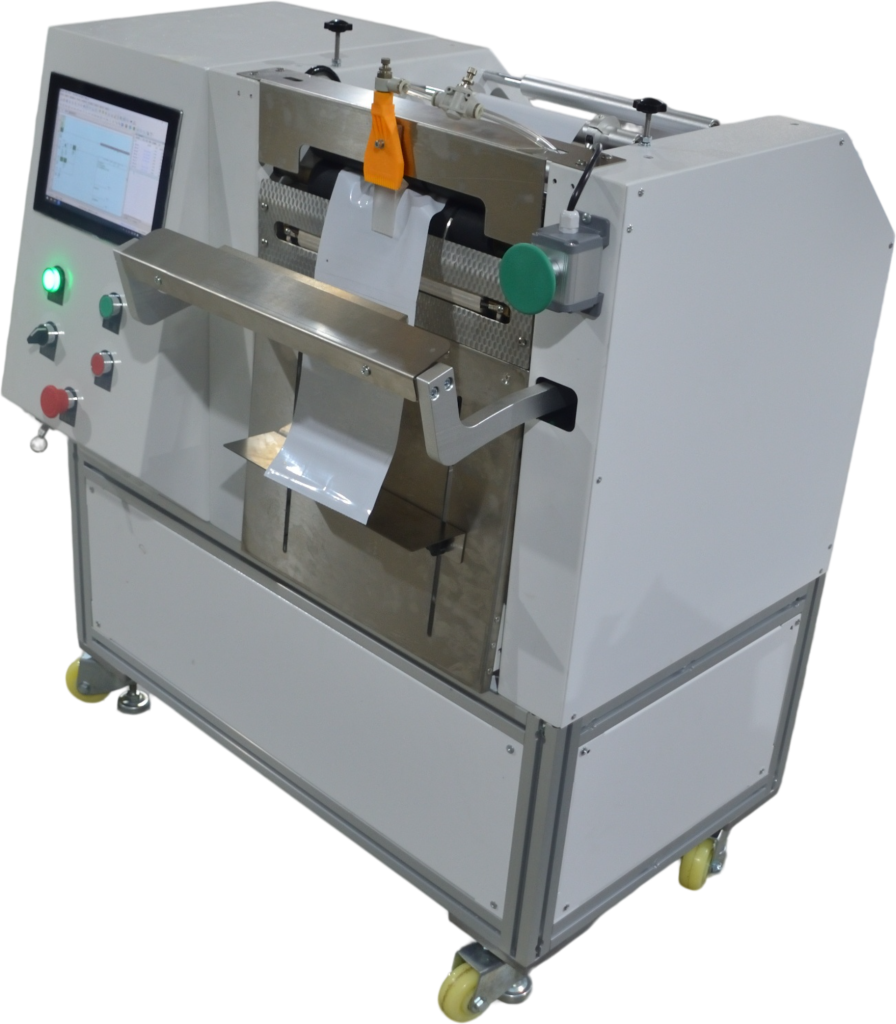
Since screws, washers, and O-rings have irregular shapes and individual bags have low weight, the film roll must meet two requirements simultaneously: the bag opening must open steadily, and the seal must withstand pressure from the corners. Differences in the structure of laminated film and aluminum-coated film directly affect the smoothness of film feeding. We recommend conducting a continuous test run of 30–50 bags using the actual material, recording the empty bag rate and any seal breakage.
The one-time investment focuses on the range of compatibility between the equipment and the rolled film structure.Pre-opening Continuous-Roll Bag Packaging MachineUse servo sealing with tear-off separation. During bag testing, run the same roll of film at both low speed and normal cycle rates to compare whether the seal line turns white or breaks. When breaking down the cost of a roll of film, calculate consumables by multiplying the unfolded length per bag by the unit price, and include empty bags in the denominator.
Empty bags in the hardware category most often occur during the bag-opening process. The pre-cut design separates the bag opening during the bag-making stage, allowing for bag retrieval and opening in a single step; however, bags may still fall out if the film roll diameter is too large or if film tension is unstable. After bag testing, divide the number of empty bags by the total number of bags to establish a baseline. Compare the first three production batches against this baseline before mass production begins.
Scenario 2: Snack Foods and Pet Treats—Blurred Invoices and Enlarged Reprinted Versions
In the food industry, flavors and package sizes change frequently; if production dates and lot numbers are pre-printed, the risk of inventory write-offs is high. TTO’s on-demand printing allows for immediate updates to label content, eliminating pre-printed inventory. Ribbon consumption must be included in consumables costs: based on print area estimates, the number of labels that can be printed per roll generally depends on character coverage. We recommend conducting a test print of 100 bags using the actual layout and recording the remaining ribbon quantity.
Changeovers represent hidden costs. Under parametric formula management, changeovers are performed by a single person, with adjustment times starting at around ten minutes. For cost accounting purposes, multiply the number of minutes of downtime for each changeover by the hourly cost of the production line, and then multiply that by the number of changeovers per month. If there are more than 10 changeovers per month, the inventory management methods for film rolls and color ribbons must be adjusted accordingly.
When breaking down the cost of film rolls in this type of scenario, it is important to list the following changeover losses separately: the remaining amount of film from the old layout, waste from changing color ribbons, and the number of bags required for the first-piece verification. Record these three items by batch; after accumulating data for three months, you can determine whether it is worth switching to on-demand printing.
Scenario 3: Pharmaceuticals and Electronic Components—Accounting Depends on Cleanliness and Traceability Consistency
Medical supplies, sensors, and connectors have strict requirements for bag surface cleanliness and seal integrity. No dust particles should be released during the film unwinding process, and no material should be trapped in the sealing area. When planning the initial investment, consider whether to integrate coding: having a single machine perform bagging, sealing, and coding reduces intermediate steps and minimizes the risk of contamination from handling semi-finished products.
Consumables are tracked by batch: For each batch, record the amount of film roll used, the amount of ribbon used, and the number of defective bags. For pharmaceutical products, it is recommended to set aside 5–10 bags per batch for spot checks of seal strength; the data should correspond to the film roll batch number. If the scrap bag rate exceeds the baseline for test bags in two consecutive batches, first check for film roll misalignment and sealing parameters, then check whether materials are causing bags to jam.
Cost Comparison Table for Three Types of Scenarios
| Scene | Key Areas for One-Time Investments | Key Points on Long-Term Consumables | Test Bag Validation Procedure | Accounting Basis |
|---|---|---|---|---|
| Small Hardware Items | Compatibility of Roll-Formed Structures, Servo Sealing | Roll Film Utilization Rate, Empty Bag Rate | Conduct a continuous test on 30–50 bags, recording the number of empty bags and breakages | Unfolded length per bag × unit price; empty bags are included in the denominator |
| Snack Foods | TTO Printing Integration, Recipe Management | Ribbon consumption, plate changeover waste | Print 100 test pages and record the remaining ribbon level | Ribbons are allocated based on print area; changeovers are calculated based on minutes of downtime. |
| Medical Electronics | Integrated Bagging and Coding, Clean Film Feed | Reject Rate, Sampling Costs | Random inspections of seal strength for 5–10 bags per batch | Record the usage of roll film and ribbon by batch, and compare the defective bag rate to the baseline |
General Principles for Selection: Determine the roll-film structure first, then calculate the equipment costs
The common feature of these three scenarios is that the membrane roll is prepared before the equipment is set up. The membrane structure, the method of pre-cutting the bag opening, and the inner diameter of the roll core determine whether the equipment can feed the membrane smoothly. When purchasing, first request the membrane structure specifications and roll diameter parameters from the membrane roll supplier, and then useSingle-sided pre-perforated roll filmTest the bags on the machine to confirm that bag retrieval and opening are completed in a single operation.
From the equipment perspective, consider two points: whether it supports desktop loading for small-batch, high-variety production and has a small footprint; and whether changeovers can be completed by a single person. Parametric recipe management saves bag length, sealing temperature, and coding content as recipes, which can be recalled during production changeovers. When breaking down film roll costs, include recipe changeover time and test-run time in the production changeover costs to avoid calculating costs based solely on the unit price of consumables.
Important Considerations and Frequently Asked Questions Upon Arrival
Keep records of bag testing and acceptance, including: film roll batch number, equipment model, cycle time, number of empty bags, number of torn seals, and remaining ribbon quantity. After recording data for three batches, use the actual figures to calculate the total cost per bag and compare it with the quotation. When the coding content needs to be changed, useThermal Transfer Coding MachinePerform an on-the-spot print test to verify character clarity and ribbon adhesion.
Frequently Asked Questions About Accounting
Q: Does a low unit price for roll film necessarily mean it's a good deal?
Not necessarily. Even if the unit price is low, unstable film feeding and a higher rate of empty bags will offset the price difference. Calculate the total cost per bag, factoring in the empty bags and downtime from product changeovers, and then compare prices.
Q: For small-batch, high-variety production, how should we manage inventory of film rolls and ribbons?
Stock roll film according to the list of bag types specified in the formula, and estimate monthly ribbon consumption based on print character density. When there are more than 10 product changeovers per month, set separate safety stock levels for roll film and ribbons.
Q: How many test bags are needed to make a determination?
For hardware products, conduct a continuous test run of 30–50 bags to inspect the empty bags and seals; for food products, conduct a test run of 100 bags to assess ribbon consumption; for pharmaceutical products, randomly select 5–10 bags per batch for inspection. Compare the test run records with data from the first three production batches; if there are significant deviations, retest.
Do you need to verify compatibility based on your bag type and material?Contact UsGet product selection recommendations and sample bag options.