


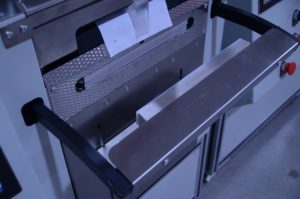
| Dimensions of Comparison | Constant-Temperature Seal | Pulse-type seal |
|---|---|---|
| How It Works | The sealing rod remains at a high temperature and instantly melts the surface of the material when it closes. | After the sealing bar closes,Instant Heating Upon Power-Up, after sealing is completeRapid Cooling。 |
| The Warming Process | It requires a warm-up period and consumes power while on standby. | No preheating required, Heats up instantly, ready to use right away. |
| Cold-Pressing Process | 无. The sealing bar remains hot at all times, and the film surface is still very hot when opened. | 有. Only after the seal has cooled and set under pressure does the sealing bar open. |
| Key Advantages | SealShort cycle... It is fast and suitable for continuous, high-volume production. | SealSturdy, smooth, and attractive, with no risk of shrinkage deformation. |
| Major Disadvantages | Seals includeShrinkage, distortion, wrinklingrisks that affect both appearance and strength. | The sealing cycle is relatively long (including cooling time), which poses a challenge for high-speed production. |
| Applicable Scenarios | For applications where the appearance of the seal is not a major concern, but maximum speed is the priority. | Applications with high requirements for seal strength and appearance (flatness, uniformity), especially for packaging lightweight, precision products. |
Key Differences: The Value of the Cold-Pressing Process
“The ”cold-pressing process“ is the core advantage of pulse sealing. It is not merely ”cooling,” but ratherAllow the sealing area to set naturally from the molten state while maintaining pressure., which delivers three key benefits:
-
A more secure seal: When the material crystallizes and sets under pressure, the molecules bond more tightly, resulting in higher peel strength.
-
A more aesthetically pleasing seal: No shrinkage, no wrinkles, and a consistent, smooth seal width, which enhances the quality of the product packaging.
-
Better material compatibility: For films that are prone to heat shrinkage and deformation (such as multilayer composite films and thin PE films), the pulsed method can effectively control thermal deformation.
Special Notes Regarding Pre-Opened Packaging
“Pre-cut packaging should use a pulsed heating method.”, Key Technical Challenges and Solutions:
-
Challenge: The opening of pre-cut roll bags is already formed; if the sealing temperature is too high or heat dissipation is uneven, this can easily cause the bag opening to shrink or curl, thereby negating the convenience of the “pre-cut” design.
-
Solutions: Combined with pulsed heating360° Surround Air-Cooling System, which rapidly and evenly dissipates heat after sealing, effectively solving the problem of “heat buildup,” therebyEnsure that the sealing area is smooth and aesthetically pleasing, to keep the bag smooth.
-
Why can't pre-gaped bagging machines use constant-heat sealing?
In the packaging process for pre-opened pouches, especiallyManual FeedingIn this operating mode, the constant-temperature sealing method has a critical issue that is easily overlooked:
-
Heat continues to build up: Constant-heat sealing rods maintain a high temperature at all times (typically above 150°C), continuously radiating heat into the surrounding area whether in standby or active mode.
-
Temperature Rise in the Operating Area: Operators need toUp close and repeatedlyPlace the product in the bag, seal it, and leave it near a high-temperature heat source for an extended period.
-
Impact on Personnel and Quality:
-
For operators: Prolonged exposure to heat radiation can cause discomfort in the hands and face, create a harsh work environment, accelerate fatigue, and even pose a risk of burns.
-
Seal Quality: The constant-heat method lacks a cold-press setting process, making the seal prone to shrinkage and deformation, which compromises the flatness of the pre-gusseted bag.
-
-