


The most common consequence of mistakes in selecting film rolls is not that the machine breaks down first, but rather an increased rate of empty bags, film misalignment, and poor sealing after installation. Purchasing staff often treat film rolls as standard components, comparing only price and total thickness. In reality, each item—including bag type, opening method, heat-seal layer, and roll diameter—must be verified individually. Below, we break down the process from symptoms to solutions and map each common mistake in film roll selection to specific, actionable verification steps.
Troubleshooting: For empty bags, misalignment, or loose seals, check the film roll first.
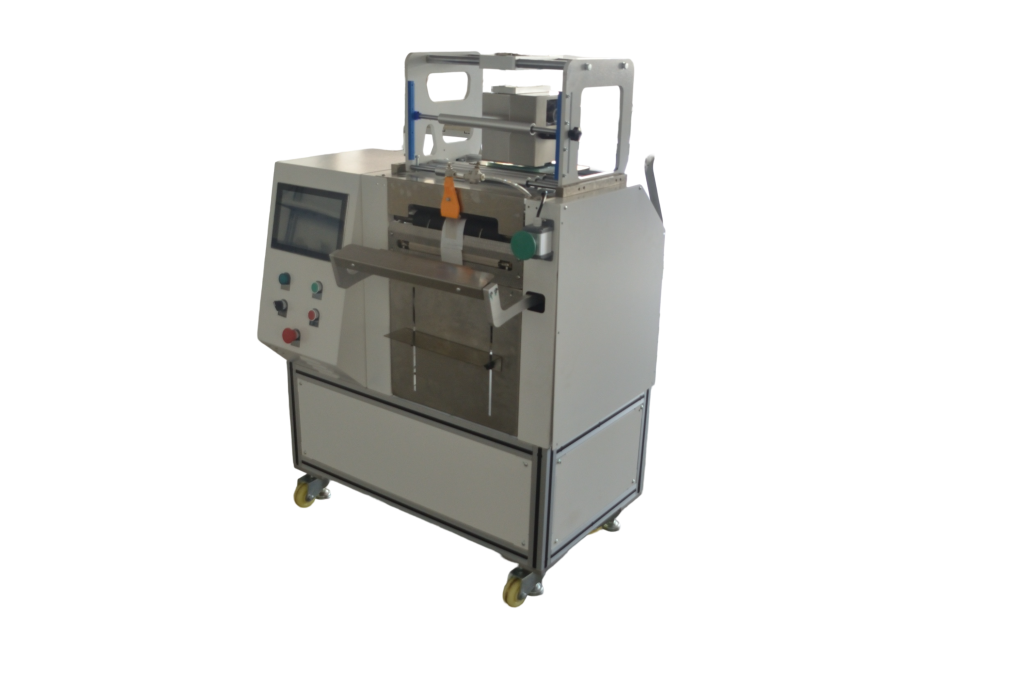
The requirements for film rolls in pre-cut continuous bag filling machines focus on three key areas: whether the bag openings are truly open, whether the friction on the film surface is stable, and whether the heat-seal layer is compatible. Taking the JYZN-350GDK pre-gusseted continuous-roll bag filling machine as an example, it features tabletop feeding and a compact footprint. After loading the film roll, the machine first runs 20–30 bags to check the opening success rate, followed by 100 bags to assess for misalignment and seal quality.
| Phenomenon | Possible Causes | Methods of Determination |
|---|---|---|
| The bag openings stick together when the bags are removed, resulting in a high rate of empty bags. | Insufficient pre-cut depth or the film layer sticking back together at the cut edge | During a production halt, randomly select 10 bags and manually open them to record the success rate for opening; if the rate is lower than expected, replace the roll and retest. |
| Membrane misalignment, unstable bag position | Uneven roll diameters and fluctuations in the film surface coefficient of friction | Measure the runout of the roll end face with a ruler; it is typically kept within a few millimeters. Compare the direction of runout between rolls from the same batch. |
| Incomplete Sealing; Inconsistent Tear-Off and Separation | The heat-seal layer structure does not match the current temperature and pressure. | With the speed and pressure held constant, perform a gradient sealing test with temperature steps of 5°C to observe peel and tear behavior. |
| Drift in the Marking Position | Fluctuations in film surface tension or large thickness tolerances in the rolled film | Take 5 bags from before and 5 bags from after the TTO coding process, measure the distance from the print area to the edge of the bag, and check whether the deviation exceeds the process specifications. |
Misconception 1: Selecting roll film based solely on total thickness, without considering the heat-seal layer
Even when the total thickness is the same, the sealing performance can vary significantly depending on the composite structure. The heat-seal layers of composite films and aluminum-coated films respond differently to sealing temperature and pressure; ordering based solely on total thickness can lead to the discovery—only after the material is installed on the machine—that the seal is not secure. This is the most subtle pitfall in selecting roll films, and it is completely invisible on drawings.
An alternative approach is to request structural specifications from the supplier to at least confirm the material composition and thickness ratio of the heat-seal layer, and then conduct temperature gradient test seals using the current machine model. For servo-driven sealing machines such as the JYZN-350GDK, sealing parameters can be saved according to the formula. During test sealing, record one set of temperature, pressure, and time values for each combination; these can then be directly recalled for mass production. Validation criteria: The appearance of 50 consecutive bags must be consistent, and the tear-off point must be stable.
Misconception 2: Treating pre-cut openings as a generic feature without verifying the opening type and depth
Pre-opening is the process of separating the bag opening in advance during the bag-making stage, allowing for bag retrieval and opening in a single step. Since the opening depth and side vary among different suppliers, this can affect the coordination between the bag-filling machine’s suction cups and the nozzle.
When purchasing, verify whether the bags have a single-sided or double-sided opening, the range of opening depths, and whether the openings have been treated to prevent re-adhesion. When testing bags with the JYZN-P350S or JYZN-P350, first run 30 bags to calculate the opening success rate, then run 100 bags to see if the empty bags are concentrated in a specific section of the film roll. A concentration of empty bags indicates an issue with the consistency of the film roll batch, not a problem with the machine settings.
Misconception 3: Ignoring the roll diameter and core, and focusing only on the film width
Inconsistent roll diameters can cause fluctuations in web tension, and this is often the source of web misalignment and code drift. Models that feed from a tabletop are more sensitive to roll diameter and core inner diameter; rolls that are too large cannot be stabilized, while rolls that are too small require frequent roll changes.
Actionable checkpoints: Measure the runout of the roll end face; measure the clearance between the core’s inner diameter and the machine’s unwind shaft; verify that the tension during winding is consistent. After changing the roll, run the machine empty for 5–10 bags to check whether the film path is centered before resuming normal production. Verify the roll diameter range according to the machine manual; do not rely on visual estimation based on experience.
Misconception 4: Using price as a substitute for sample bags and skipping on-press verification
Although the unit price of roll film is low, the rate of empty bags on the production line is high, which actually increases the overall cost. Empty bags require manual rework,Thermal Transfer Coding MachineThe ribbons used for coding are also wasted.
An alternative approach is to treat the trial run as a step in the procurement process: produce 100–200 bags using the target material, bag style, and production cycle, and record the empty bag rate, number of instances of misalignment, and number of defective seals. The batch size is determined based on the results of the trial run. The specifications for pre-cut roll film can be compared againstPre-opening Continuous-Roll Bag Packaging MachineCheck the instructions for the applicable bag type to avoid repeatedly adjusting the machine with an incompatible film.
Handling and Retesting: Change Only One Variable at a Time
When troubleshooting, do not change the film roll and adjust machine parameters at the same time. First, lock in the machine settings and compare results by changing only the film roll; after confirming the issue is with the film roll, then adjust the temperature, pressure, and speed. Re-testing should follow a three-step process: an initial assessment of 30 bags, confirmation with 100 bags, and a stability check with 300 consecutive bags. Record the empty bag rate and the number of poor seals for each stage. If the issue lies in the coding zone, simultaneously verify the TTO parameters and the film surface tension.
How to Prevent Recurrence: Include the Roll Film in the Acceptance Checklist
- Retain a sample from each batch of rolled film, labeling it with the structure, heat-seal layer, opening method, and roll diameter.
- For each new batch, run a trial production run of 30 bags to verify the opening success rate and the appearance of the seals before moving to mass production.
- Temperature, pressure, and speed are saved as recipes by film roll batch; a single person can handle the changeover, and the adjustment time starts at around ten minutes.
- Record the empty bag rate and the number of defective codes; if an anomaly occurs, check the film roll batch first, then the machine.
Most common mistakes in selecting film rolls can be identified through a single standardized bag test. Do you need to verify compatibility based on your bag type and material?Contact UsGet product selection recommendations and sample bag options.