Home » Solutions to Confusion When Selecting a TTO Thermal Transfer Printer
Solutions to Confusion When Selecting a TTO Thermal Transfer Printer
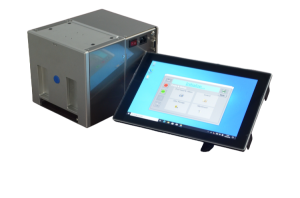
Split-Design TTO System
The Core Issue: Electric TTO or pneumatic TTO—which one should I choose? Intermittent or continuous operation—which is better suited for my production line?
I. The Core of Selection Dilemmas: Two Key Decisions
When purchasing TTO, customers' most common concerns center on two aspects:
Drive Type: Electric vs. Pneumatic
Operating Modes: Batch vs. Continuous
These two options are independent of each other, but both directly affect whether the equipment can operate smoothly and the overall cost. We’ll break them down one by one below.
II. Drive Types: Electric vs. Pneumatic
2.1 Key Differences
Electric TTOs and pneumatic TTOs use the same thermal transfer principle; the only difference is thatPrint Head Drive Methods—The electric type uses an electromagnetic or electronic drive mechanism to control the print head, while the pneumatic type relies on compressed air for drive.
Dimensions of Comparison
Electric TTO
Pneumatic TTO
Printhead Air Supply
Not necessary
A supply of certified compressed air is required.
Equipment Deployment
Reduce the Number of Tubing and Air-Treatment Components
An air compressor, air hoses, filters, and a pressure-reducing device must be installed.
Key Variables
Electrical Controls, Mechanical Installation
Electrical Controls, Mechanical Installation, and Pneumatic Stability
More suitable
Applications without a centralized gas supply, embedded devices, and products sensitive to gas flow
Mature production lines with an established, centralized gas supply
2.2 Which One Is Right for You?
The electric TTO model should be selected in the following situations:
✅ FactoryNoneCentralized Gas Supply System
✅ Small and medium-sized factories, newly built packaging lines, and standalone automated packaging equipment
✅ Designed for packaging tablets, capsules, and light powders—products that are easily affected by localized air currents; the electric model does not generate additional airflow disturbances.
✅ We hope to simplify equipment piping and reduce the number of air lines and air treatment units.
Consider using a pneumatic TTO in the following situations:
✅ The factory already has a stable, clean centralized gas supply system.
✅ The production line operates continuously at high capacity for extended periods
✅ The air supply piping is well-installed, and the cost allocation is reasonable
2.3 Clarification of Common Misconceptions
Misconception 1: Is the print quality of an electric TTO always better than that of a pneumatic TTO?
Not necessarily. While electric drives do eliminate external air pressure fluctuations as a variable, print quality also depends on factors such as film material, ribbon matching, print speed, temperature, pressure, and installation rigidity. Pneumatic TTO printers can also achieve consistent print results when the air supply pressure is stable and the air quality meets standards.Ultimately, this still needs to be verified through actual prototyping.
Misconception 2: Is the operating cost of an electric TTO always lower than that of a pneumatic TTO?
You can't just look at the drive type. You should followFive-Year Total Cost of Ownership (TCO) Comprehensive Assessment:
Total Cost of Ownership = Equipment Purchase + New/Allocated Air Supply + Installation and Commissioning + Energy Consumption + Ribbon Consumables + Regular Maintenance + Downtime Losses
Factories without a centralized air supply: Electric models eliminate the upfront and maintenance costs of air compressors and are generally a better choice.
Large factories that already have a centralized gas supply: Pneumatic systems do not require the construction of a new gas source and may still offer a cost advantage.
Ribbon savings depend on the control design of the specific model; not all electric TTOs are more ribbon-efficient than pneumatic TTOs.
III. Operating Modes: Intermittent vs. Continuous
3.1 Key Differences
The choice comes down to a simple question:Is the film “moving” or “stationary” during printing?
Dimensions of Comparison
Intermittent TTO
Continuous TTO
When printing on film
Stop moving; the print head scans the print area
Keep moving; the print head remains stationary
Applicable Scenarios
Production lines that require pauses, such as VFFS vertical packaging and three-side-sealed bags
VFFS production lines for small bags, strip packaging, and single-serve pouches
Horizontal Pillow-Style Packaging Machines, High-Speed F/F/S Production Lines
Print Position Control
Significant results are achieved when the film stop position is repeatable
Significant results are achieved when the film speed and registration are stable.
Key Risks
A print area that is too large or an excessive amount of data can increase cycle time.
Printing distortion occurs when the film speed or tension is unstable
3.2 Which One Is a Better Fit for You?
Select Intermittent TTO:
✅ The packaging machine is a vertical form-fill-seal (VFFS) machine; brief pauses are required during the filling, sealing, and cutting stages.
✅ The production line operates at low to medium speeds, with a “stop-and-go” rhythm.
✅ High precision is required for print positioning
Select Continuous TTO:
✅ The packaging machine is a pillow-style (HFFS) or sheet-fed machine, with the film running continuously
✅ The production line operates at a high speed and requires uninterrupted, continuous operation.
✅ The print content is long or the print area is large
💡 Some TTO models support both intermittent and continuous operation....It can address the needs of both scenarios in one step, making it the ideal choice when the production line type is uncertain.
IV. Flowchart for the Comprehensive Selection Decision-Making Process
Step 1: Determine the drive mode
text
Does the factory have a stable, centralized air supply?
├─ No → Electric TTO recommended (saves on air supply costs and simplifies deployment)
└─ Yes → Either electric or pneumatic is acceptable
        ├─ New production lines/small to medium-sized factories → Electric models recommended (flexible deployment)
 └─ Large, established production lines/continuous high-load operations → Pneumatic models are also viable
Step 2: Confirm the operating mode
text
Is the film “moving” or “stationary” during printing?
├─ Stopped (VFFS vertical form-fill-seal) → Select intermittent or dual-mode (intermittent/continuous)
└─ Continuous operation (HFFS/sheeter) → Select continuous or dual-mode (intermittent/continuous)
Step 3: Match the print settings
Print Content Requirements
Recommended Resolution
Recommended Width
1–2 lines of text (date/lot number)
200 dpi
32 mm
Multi-line Text + Barcode
300 dpi
32–53 mm
QR Code/Logo/Graphic
300 dpi
53 mm or larger
Wide-Format/Multi-Column Packaging
300 dpi
107–128 mm
V. Quick Self-Assessment Checklist
Before contacting a supplier, confirm the following information to significantly improve the efficiency of your product selection: